

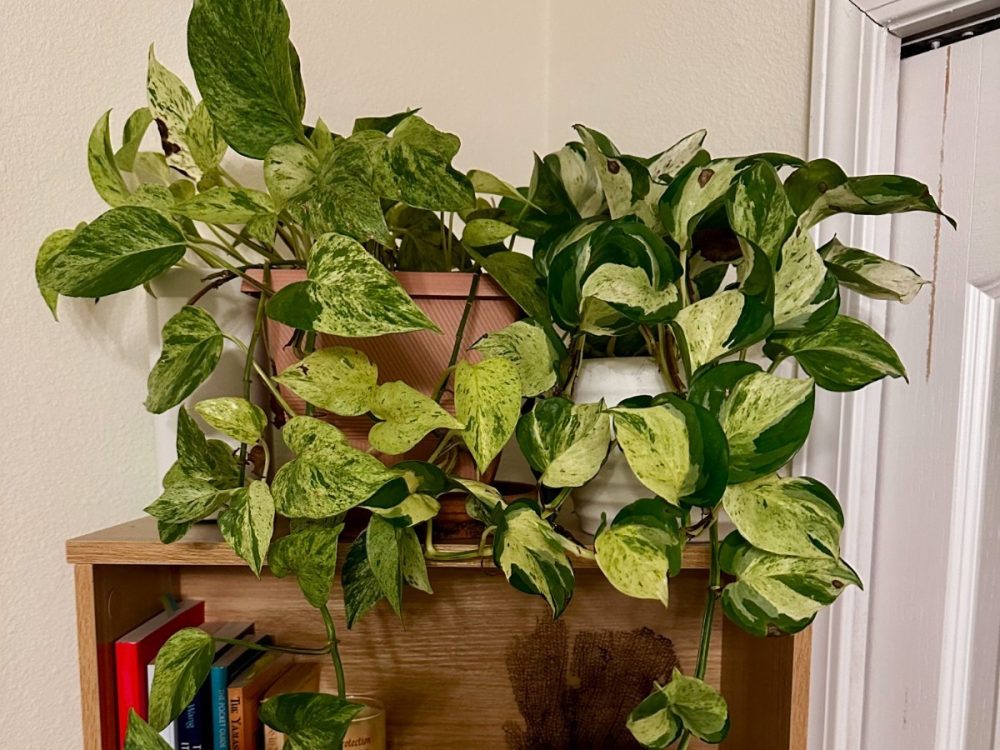

Tell us about a time you had to change your plant-care habits because something wasn't working.
Sometimes plants just don't like the environment they are in, and need a change, much like us humans. It's good to inquire about their lighting, watering, and humidity needs, as well as to identify any pests or diseases that may be harming the plant. All of these environmental factors are essential to keeping a happy plant. At the clinic I work out of, we keep live plants to maintain the therapeutic environment. When I realized that our lighting was not ideal for many of the plants, we began moving them into our brightest room to allow all of them to receive adequate doses of Vitamin D over the weekend. We saw much new growth. We also fought off fungus gnats with cinnamon, fly traps, and reduced watering. I moved plants into the "rehab" room when I noticed they weren't happy with their lighting or seemed sick, and we kept them on a rotation as needed until they were all thriving. I created a watering schedule for all our clinic managers to follow and taught others the importance of checking soil saturation and reading what the leaves were telling them the plant needed.
Have you cared for orchids, succulents, or cacti? If so, tell us about your experience and how their care differs from other houseplants. If you haven't, what types of plants are you most familiar with, and what have you learned from caring for them?
I am most familiar with tropical houseplants, however have also successfully taken care of orchids and cacti. Recently, I was gifted orchid cacti to rehab and fell in love with this fast-growing, hardy plant. I have knowledge to gain when it comes to cacti, but I have faith in my ability to learn and take what I already know regarding succulents into their care. I am very cautious of overwatering, and understand that when they are watered, they prefer a good soak and drain, to avoid soggying up the soil and plant. I am also aware of the sandier and sometimes chunkier soil mixes needed for cacti and orchids. One orchid I received in 2022 has bloomed 4 times! This past year, it has bloomed twice. A testament to the right watering schedule when the leaves begin to become less full, and the love and care they appreciate when it comes to pruning after blooms.
A plant owner asks you to water everything, but one pot is still soaking wet. How would you handle it?
I would let them know it's my pleasure to help them with watering their plants and checking on them. I'd also ask them to take a look at the one plant that seems to be overwatered with me, and explain to them that some plants prefer different watering schedules and/or soil. We could investigate the potting soil used, and look into whether this type of plant would do better with orchid bark, or maybe some sand to allow better drainage in their soil. This may help the plant handle more frequent waterings. We could look into everything together so they know my level of expertise, respect for them, their clients, and their plants. This way, everyone could remain involved and in control, and I would not be overstepping or disrespecting their wishes. I think it's incredibly important to communicate and educate collaboratively when working in a group, rather than assuming and just handling it on my own. However, if you prefer I handle it on my own and inform you of updates, that is not something I have a problem with at all!
What information would you want from a plant owner before agreeing to care for their collection?
I would love to know what their expectations are from me, whether they would prefer a visit in between guests staying in their home to make sure all is well with the plants before new guests arrive, or if they would prefer a weekly/biweekly visit, or even a daily check-in. I'd like to know if they would like me to board any plants over the winter if they have concerns regarding where the plants are located and dropping temperatures. I would also appreciate knowing whether they would like progress pictures, and whether they would be okay with replacing a plant at a certain point for aesthetic purposes if it contracts a disease that requires quarantining. Plants are a key factor in making any environment feel rejuvenating, and I would like to understand their expectations around aesthetics when it comes to trimming, as well as diseases or pests. My main goal would be to understand their expectations of me and how i can best assist their needs and lifestyle or business model.
What's one skill or habit outside of gardening that helps you take good care of plants?
Growing up, I was always the type of girl who preferred being outdoors with nature and animals. I currently work in Healthcare as a specialty treatment coordinator, where my nurturing skills can thrive. This job allows me to work with insurance prior authorizations, something that has helped hone my skills in not giving up, especially in the face of denials or tough battles through appeals. In addition to my healthcare experience, I am also the mom to 3 wonderful fuzzy cats and an expecting mom-to-be of a wee little baby. The thing in life that provides me the most joy is being able to take part in watching people, animals, and plants grow into the best versions of themselves, even through difficult hardships or battles with opposing forces. I've learned never to give up and to always seek the best next step to move toward this goal. All of these skills have transferred into my plant care as well. I always tell my fellow plant friends, "We give energy to the things that give energy back to us."

 By
newleafjoy