

- House Plant Sitting
- June 30, 2026
- News
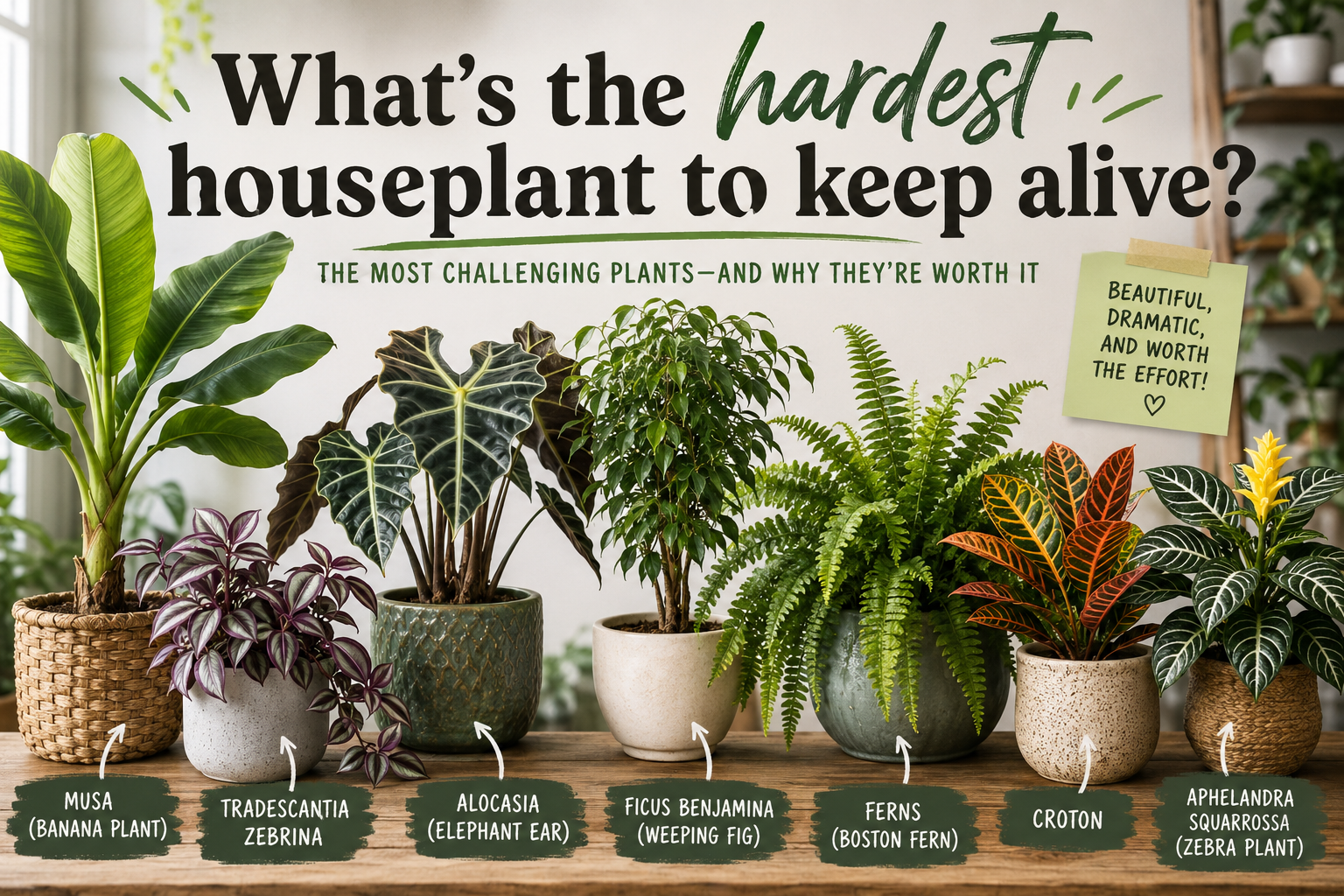
What's the hardest houseplant to keep alive?
What's the hardest houseplant to keep alive?
Everyone loves an easy houseplant. Give us a pothos, a snake plant, or a ZZ plant and we suddenly start acting like we’re running a small botanical research institute out of the living room. We water it occasionally, forget about it for two weeks, remember it exists, and somehow it still looks better than we do after a long weekend.
But then there are the other plants.
The divas. The fainting couch plants. The ones that seem to require filtered sunlight, perfectly moist soil, tropical humidity, emotional reassurance, and possibly a handwritten apology if you move them three inches to the left. These are the houseplants that make experienced plant parents stare into the middle distance and whisper, “I thought I was ready.”
So, what’s the hardest houseplant to keep alive? The honest answer is that it depends on your home, your habits, your light, your humidity, and whether you are the kind of person who says, “I’ll water it tomorrow,” and then time-travels to next Thursday. But some houseplants have earned a reputation for being especially dramatic. They are not impossible. They are not evil. They are just very specific. Like a celebrity with a smoothie order.
And here’s the good news: many of the so-called hardest houseplants are also some of the most beautiful, rewarding, and personality-filled plants you can grow. They make you pay attention. They teach you to notice light, soil, humidity, and the subtle language of leaves. They also teach you that “low maintenance” is a beautiful phrase that should never be taken for granted.
Musa, or banana plants
Banana plants are the houseplant version of a friend who says they’re “low-key” and then arrives with three suitcases, a humidifier, and a need to be near a south-facing window.
Musa plants are gorgeous. Their huge tropical leaves can make a room feel like a vacation, even if the vacation is happening next to your laundry basket. But banana plants are thirsty, fast-growing, light-loving creatures. They like warmth, humidity, and consistent moisture. In other words, they would prefer your home to feel less like a normal house and more like a vacation rental in the rainforest.
The tricky part is balance. Banana plants want water, but they do not want to sit in swampy soil. They want bright light, but they don’t want to be blasted into crispy leaf chips. When they are unhappy, they often let you know by drooping dramatically, which is both helpful and a little theatrical. The good news is that once you understand their routine, they usually forgive you quickly. Give them a deep drink, warmth, and enough light, and they often bounce back like nothing happened.
They are hard because they ask for a lot. But they are rewarding because they give a lot back. A healthy banana plant has the energy of a houseguest who brought their own theme music.
Tradescantia zebrina
Tradescantia zebrina is one of those plants that looks fancy enough to be difficult, but its real issue is not survival. It is styling.
This plant grows quickly, trails beautifully, and shows off purple, silver, and green leaves that look like they were designed by someone who was having an excellent day. The challenge is that Tradescantia can get leggy fast. One minute it looks full and charming. The next minute it looks like it has been stretching across the room to overhear your private conversations.
The fix is simple: trim it. Pinch it back. Give it a haircut. This encourages bushier growth and keeps the plant looking full instead of like a botanical comb-over. Tradescantia also appreciates bright, indirect light, because too little light can make those pretty colors fade and the stems stretch even more.
So is Tradescantia zebrina one of the hardest houseplants to keep alive? Not exactly. But it can be one of the easiest to make look sad if you never prune it. This is not a plant that wants neglect. It wants a stylist.
Alocasia
Alocasia, often called Elephant Ear or African Mask depending on the variety, is the plant you buy because it looks like it belongs in an art museum. Then you bring it home and discover it also behaves like it belongs in an art museum: beautiful, expensive-looking, and very sensitive to the surrounding environment.
Alocasia likes bright, indirect light, warm temperatures, humidity, and soil that stays lightly moist without becoming soggy. This is where many people get into trouble. Too dry, and the leaves may droop or crisp. Too wet, and the roots can rot. Too much direct sun, and the leaves scorch. Too little light, and it sulks. It is the Goldilocks of houseplants, except instead of porridge it is judging your moisture meter.
Alocasias can also go dormant or drop leaves when conditions shift, which can panic new plant owners. But leaf loss is not always the end. Sometimes the plant is simply reallocating energy, adjusting to your home, or being an Alocasia, which is a full-time job.
The reward is stunning foliage: bold shapes, dramatic veins, and leaves that look almost unreal. If you can provide humidity and consistency, Alocasia can become one of the most impressive plants in your home.
Ficus benjamina, or weeping fig
The weeping fig has a name that sounds emotional, and that is not false advertising.
Ficus benjamina is famous for dropping leaves when stressed. Move it to a new spot? Leaves. Change the light? Leaves. Draft from a door? Leaves. Water too much, water too little, repot it, look at it in a tone it doesn’t appreciate? Leaves.
This is why many plant parents consider weeping fig one of the hardest houseplants to keep alive, or at least one of the hardest to keep looking alive. The plant is not necessarily dying every time it drops foliage, but it sure does enjoy making a scene.
The secret is consistency. Give it bright, indirect light, avoid cold drafts, water when the top soil begins to dry, and then leave it alone. Do not keep moving it around the house like you are trying it in different outfits. Once a weeping fig adjusts, it can become graceful, tree-like, and beautiful, with delicate leaves that make a room feel elegant.
Think of it as a long-term relationship. It needs trust, stability, and fewer surprises.
Ferns
Ferns are ancient, beautiful, and apparently still upset that most modern homes do not resemble misty forest floors.
Boston ferns, maidenhair ferns, bird’s nest ferns, and many other indoor ferns love moisture and humidity. They usually prefer soil that stays consistently moist but not waterlogged, plus medium or filtered light. This sounds simple until winter arrives, the heat turns on, and your home’s air becomes drier than a legal disclaimer.
That is when ferns begin to brown at the edges, crisp up, shed little leaf bits everywhere, and generally behave as if you personally betrayed them.
The bathroom can be a great place for certain ferns if there is enough natural light. The extra humidity from showers can help, and the lower light often suits them better than a harsh sunny window. A humidifier can also make a huge difference. Misting may help temporarily, but it is usually not a complete humidity plan unless you enjoy misting plants so often that it becomes your new unpaid internship.
Ferns are hard because they are not casual. They want regular care. They want moisture. They want atmosphere. They want you to understand that “crispy” is not a personality trait they are pursuing.
Croton
Crotons look like someone painted leaves during a tropical thunderstorm. Yellow, orange, red, green, sometimes almost purple — they are loud in the best way.
They are also not big fans of change.
A croton may look wonderful at the store, come home with you, and then immediately begin dropping leaves like it has received terrible news. This is common. Crotons are sensitive to changes in light, temperature, watering, and location. They like bright light to maintain their color, warmth, and steady watering. They do not like cold drafts, sudden moves, or being placed in a dim corner where their colors slowly fade like a sad party balloon.
The important thing is not to panic. If the stems are still healthy and the care improves, crotons can regrow leaves once they adjust. The dramatic leaf drop is often a stress response, not a final goodbye.
Crotons are not impossible. They just need a stable home and enough light to keep their colors bold. Basically, they are houseplants with strong opinions about interior design.
Aphelandra squarrosa, or zebra plant
The zebra plant is stunning. It has deep green leaves with bright white veins and, when happy, can produce a bold yellow flower bract that looks like it was designed to make other houseplants feel underdressed.
Naturally, it is picky.
Aphelandra squarrosa likes bright, indirect light, consistent moisture, warmth, and high humidity. It does not want to dry out completely, but it also does not want soggy roots. It dislikes drafts, temperature swings, and casual neglect. In many normal homes, especially dry homes, that makes it a challenge.
This is one of those plants where “just water it sometimes” is not a strategy. The zebra plant wants you to pay attention to soil moisture, humidity, and light. It wants spa conditions. It wants tropical ambience. It wants the plant-care equivalent of a luxury hotel towel folded into a swan.
But when it is happy, it is spectacular. The foliage alone is worth the effort, and the yellow bloom is a bonus prize for people who have successfully created a small Brazil-adjacent microclimate near a window.
So, what is the hardest houseplant to keep alive?
If we are choosing from the plants on this list, the hardest houseplant to keep alive for many people is probably the zebra plant, maidenhair fern, or Alocasia. These plants tend to need the thing most homes do not naturally provide: consistent humidity. They also dislike inconsistent watering, drafts, and sudden changes, which is unfortunate because homes are basically machines for creating inconsistent conditions.
The weeping fig deserves an honorable mention because of its leaf-dropping drama. Banana plants can also be tough because they need so much light, water, warmth, and space. Crotons will punish a bad location. Tradescantia is easier to keep alive, but it needs regular trimming if you want it to look full and healthy.
The real answer, though, is this: the hardest houseplant is the one whose needs do not match your home.
A fern in a humid bathroom might be easy. That same fern in a dry, sunny apartment could turn into brown confetti. A banana plant in a bright, warm room may thrive. In a dark corner, it may slowly become a tragic salad. A weeping fig in one stable spot can become gorgeous. Move it around every week and it may file a complaint by dropping half its leaves.
Hard plants are not always bad plants. They are just honest plants. They tell you when something is wrong, sometimes by fainting, crisping, shedding, drooping, or otherwise performing a one-plant community theater production called “I Am Unwell.”
And that is part of the fun. Easy plants build confidence. Difficult plants build skill. They teach you how to check soil instead of guessing, how to understand light, how humidity changes with the seasons, and how not to panic every time one leaf turns yellow.
So yes, give the hard plants a shot. Bring home the fern. Try the Alocasia. Adopt the croton. Let a zebra plant humble you in your own kitchen. With the right care, these high-maintenance green amigos can become some of the most beautiful plants you will ever own.
And if one of them throws a tantrum, remember: it is not failure. It is plant parenting. Sometimes the child has leaves, and sometimes the child is extremely dramatic.
Share on